

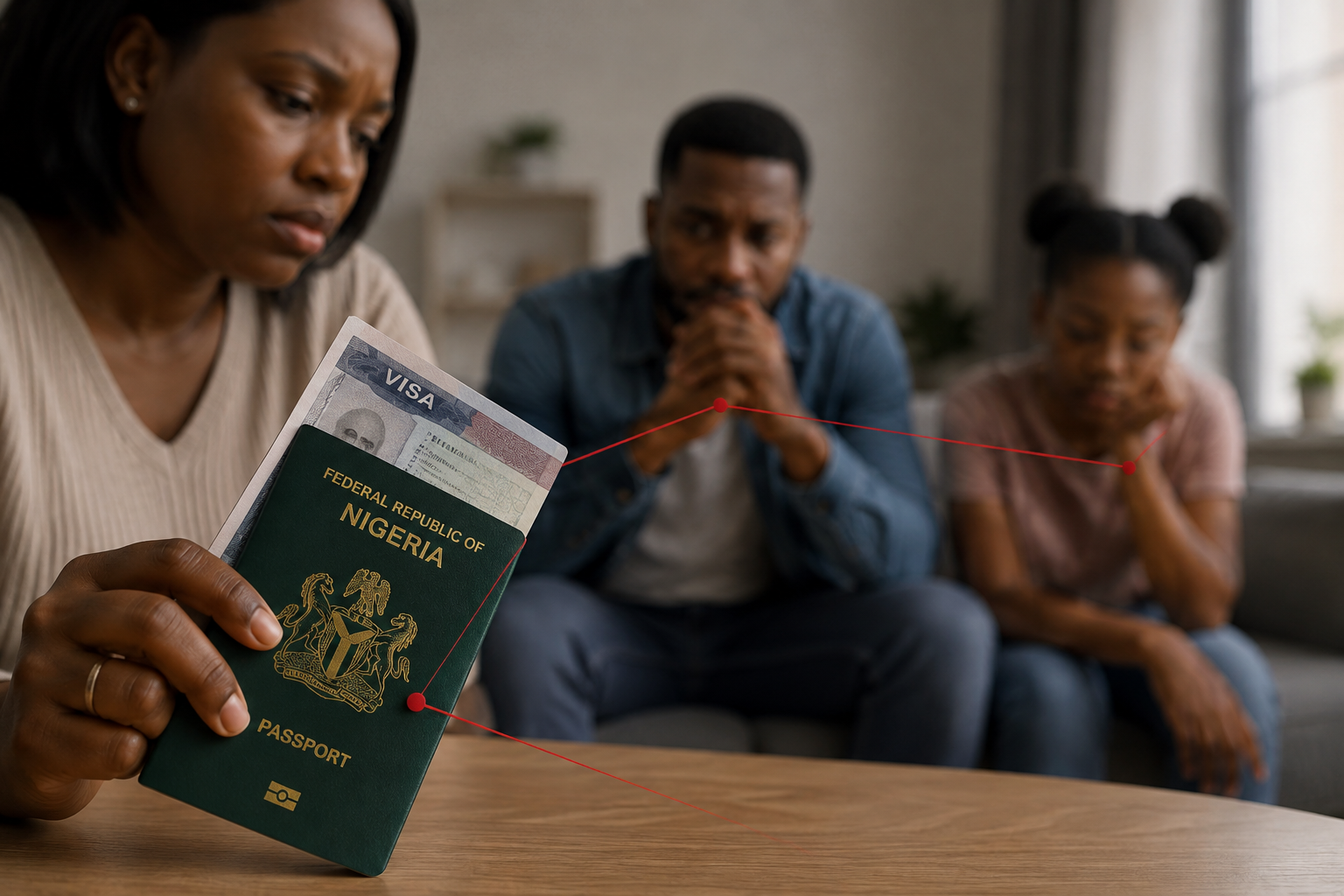

If you’re Nigerian and you’re planning to japa to the United States, abeg sit down and read this one well. There’s a new US visa policy you need to understand before you book that appointment, because it doesn’t just look at you anymore. It looks at your family.
Can your US visa be denied because of your family? Yes. Under a new July 2026 policy, US consular officers can restrict visas for immediate family members of anyone linked to cybercrime, scams, or sextortion, even without a conviction.
What Actually Changed, New US Visa Restriction Policy Explained
On July 23, 2026, US Secretary of State Marco Rubio announced a new global visa restriction policy under Section 212(a)(3)© of the Immigration and Nationality Act. On paper, this US visa policy update targets people involved in cybercrime, online scams, and sextortion. In practice, it reaches further than that.
Why Family Members Can Now Be Affected by a US Visa Denial
The policy explicitly extends to immediate family members, spouses, parents, children, and siblings. You don’t need a conviction. You no even need to be the one under investigation sef. The standard is simply being “responsible for, or complicit in” the activity. That phrasing gives consular officers a wide lane to make their own judgment call when reviewing a US visa application.
Here’s the part that should worry you most: there’s no published evidentiary threshold, and no clear appeal process for family members swept up by association. If your visa application gets flagged because of something a relative did, you may never get a straight answer on why.
Why This US Visa Policy Is Happening Now
Officials point to Americans losing an estimated $10 billion to online scams in 2024 alone, much of it linked to transnational cybercrime networks, and this visa restriction is part of a wider crackdown that includes sanctions, asset seizures, and international law enforcement cooperation. This one no be one-time statement, na signal say scrutiny on visa applications, Nigerians included, dey go up, no be down.
What This Means for Nigerians Applying for a US Visa
This is exactly the kind of shift that turns a “straightforward” visa application into a US visa denial, and it’s why guesswork isn’t a strategy anymore. A clean personal record is no longer the only thing under review. Officers now have room to weigh your household, not just your history.
That doesn’t mean panic. It means preparation has to go deeper:
- Know who’s connected to your application. If you’re applying as a dependent, sponsor, or family unit, understand that scrutiny can flow in either direction.
- Keep your documentation airtight. In a system with more discretion and less transparency, the strength of your own paper trail matters more, not less.
- Get guidance before you apply, not after you’re denied. A US visa denial under this provision may come with little to no explanation, making it far more important to get it right the first time than to appeal after the fact.
Frequently Asked Questions
What is Section 212(a)(3)©?
It’s the part of the Immigration and Nationality Act that lets the US government restrict visas over cybercrime, scams, and sextortion links, now extended to immediate family members too.
Does this US visa policy apply specifically to Nigerians?
It’s a global policy, not Nigeria-specific, but Nigerian applicants should expect the same increased scrutiny as travellers from other countries flagged for scam-related activity.
Can I appeal a visa denial under this policy?
There’s no published appeal process specifically for family members affected under this rule, which is exactly why getting your application right the first time matters.
How do I know if this affects my visa application?
If anyone in your immediate family, spouse, parent, child, or sibling, has any link to cybercrime or scam activity, however indirect, your application could face extra scrutiny.
The Bottom Line: How to Protect Your Japa Plans
This US visa restriction policy is moving faster than we can imagine, and the cost of finding out too late is a denied application with no clear path to fix it. This is exactly the kind of update that should shape how you prepare, not just what you submit.
If you’re planning to travel, study, or relocate to the US, don’t do this alone. Talk to us at myjapa.ng before you apply, not after.
